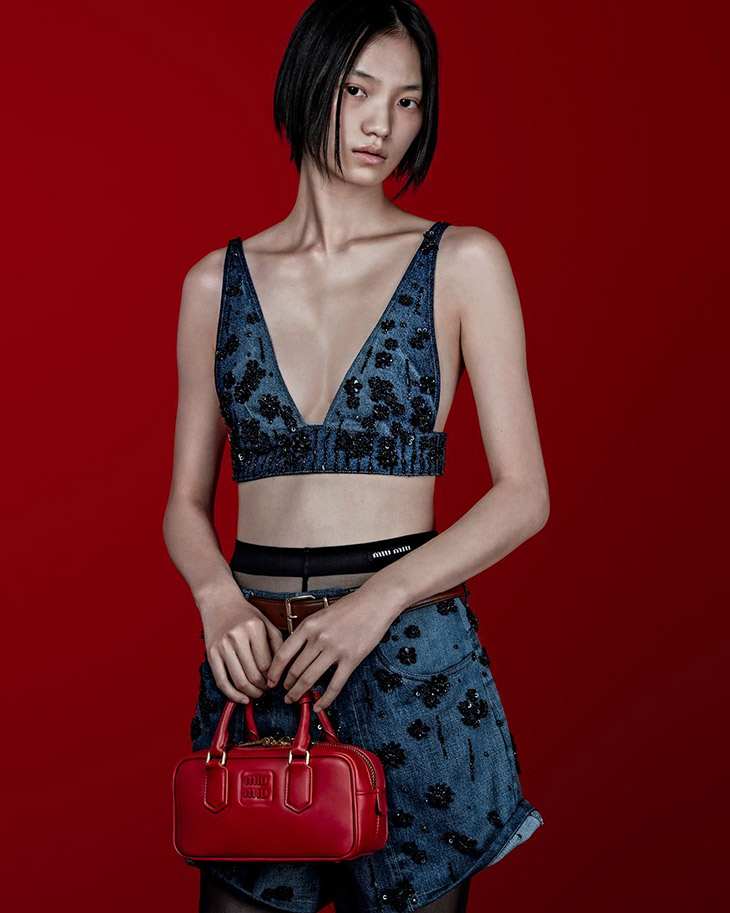
By 1993, Miuccia Prada had already turned Prada into shorthand for sophisticated minimalism. She could have stopped there. Instead, she launched Miu Miu — her own childhood nickname — as a space for everything Prada didn't allow itself: color, irony, deliberate imperfection, a younger, less solemn attitude. It wasn't a diffusion line born from budget or age targeting. It was a diffusion line born from temperament.
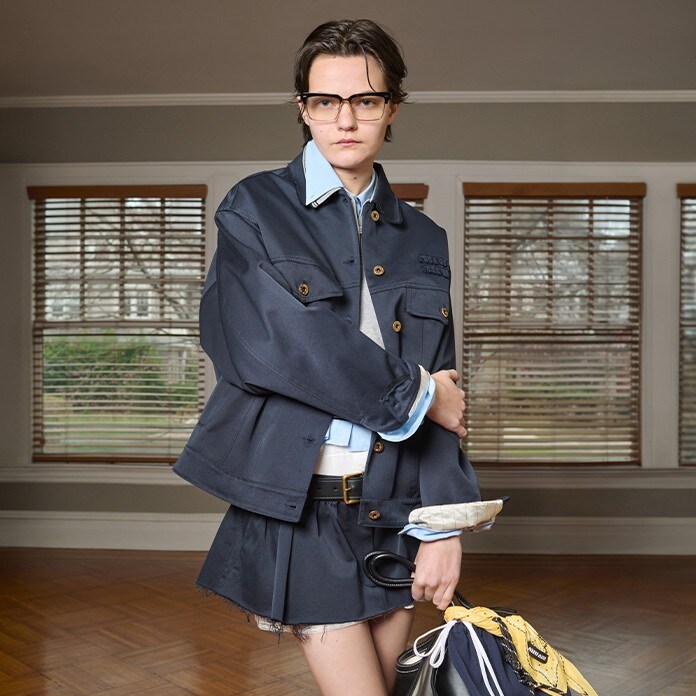
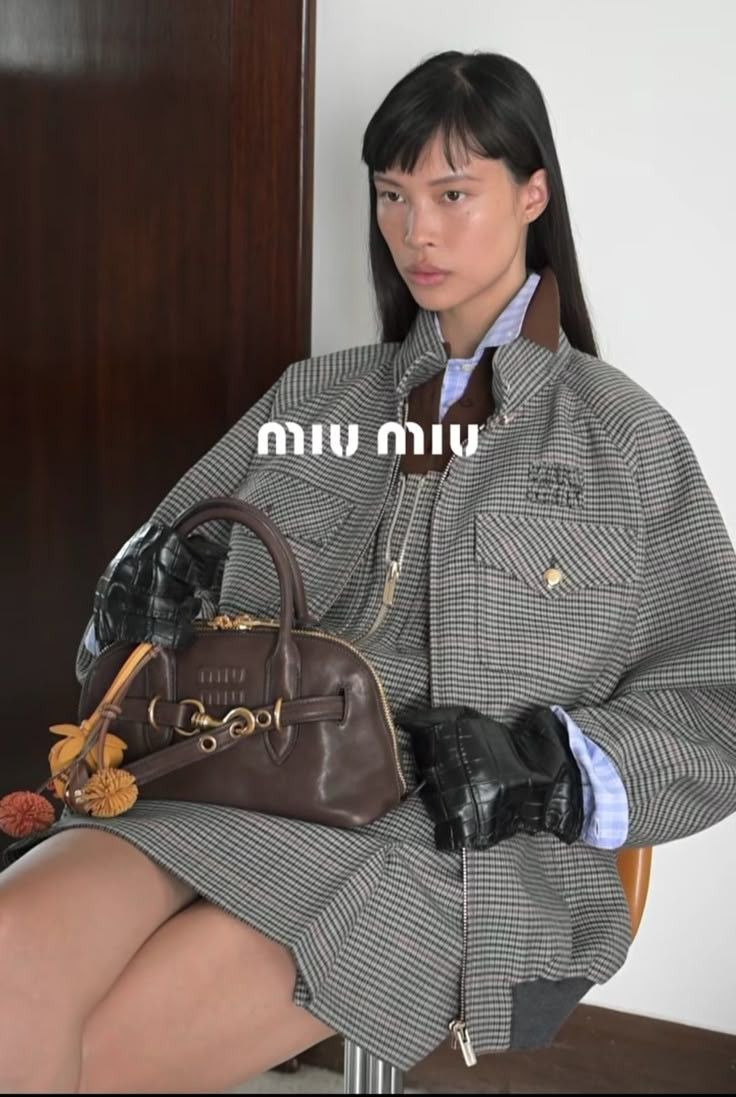
That freedom explains why, three decades later, Miu Miu is one of the most referenced names in contemporary fashion. While European luxury tends to move by accumulating heritage, Miu Miu moves by contradiction: archive pieces mixed with garments that look borrowed from someone else's closet, fine fabrics cut on purpose to look undone, glamour with something slightly off.
“A garment today doesn't just compete with other garments. It competes for attention in a feed.”
The moment that best captures that philosophy came in 2022, when the brand showed a low-rise micro-skirt that dominated online conversation — memes included — for weeks. It wasn't an accident. It was proof that Miu Miu understands the current fashion cycle better than almost anyone.
That same instinct drives its Y2K revival and its reading of “indie sleaze.” Miu Miu isn't quoting 2000s fashion with nostalgia — it's re-releasing it as commentary. Worn-in ballet flats, fishnets, office blazers pulled out of context: pieces that look found rather than designed, even when they're built with total artisanal precision.
That instinct for desirability shows up clearly in its most celebrated products. Miu Miu's ballet flats — simple, flat, no platform — became the quiet counterpoint to the sneaker: proof that comfort could also be a style statement within luxury. The brand's cat-eye sunglasses, with their sharp, slightly vintage frame, became a staple among fashion editors and celebrities looking for a recognizable accessory without leaning on a big logo.
But the piece that best captures Miu Miu's cultural power in recent years is the Arcadie bag, introduced in 2023: a small, woven raffia bag that looks almost handmade, sold out within minutes, and generated months-long waitlists. It was an unusual phenomenon for a luxury brand — a piece with no visible logo, made from a humble material, that ended up more coveted than competitors' heavily branded bags. Alongside it, the quilted nappa-leather “matelassé” bag line covers the other side of the catalog: more classic pieces built to last seasons, not viral cycles.
Today Miu Miu sits inside the same group as Prada but holds its own place in the cultural conversation — less formal, more underground, followed by a fanbase that treats it like a band rather than a fashion house. It's proof that in contemporary luxury, well-executed irreverence carries as much weight as heritage.