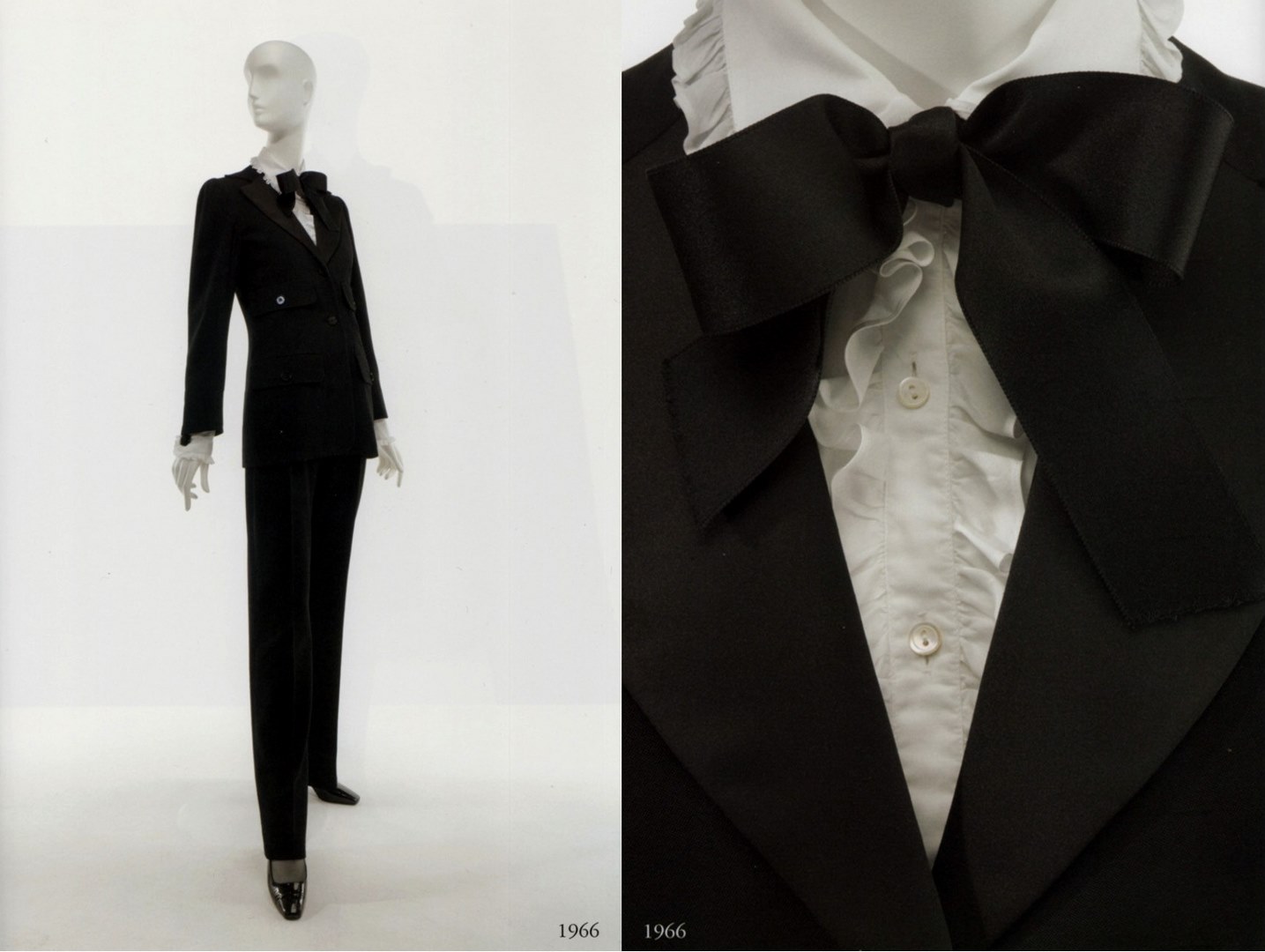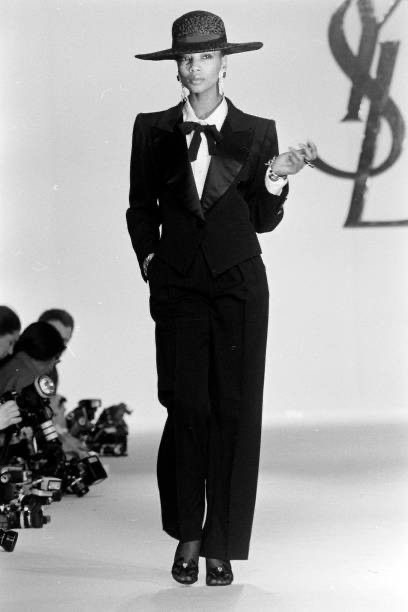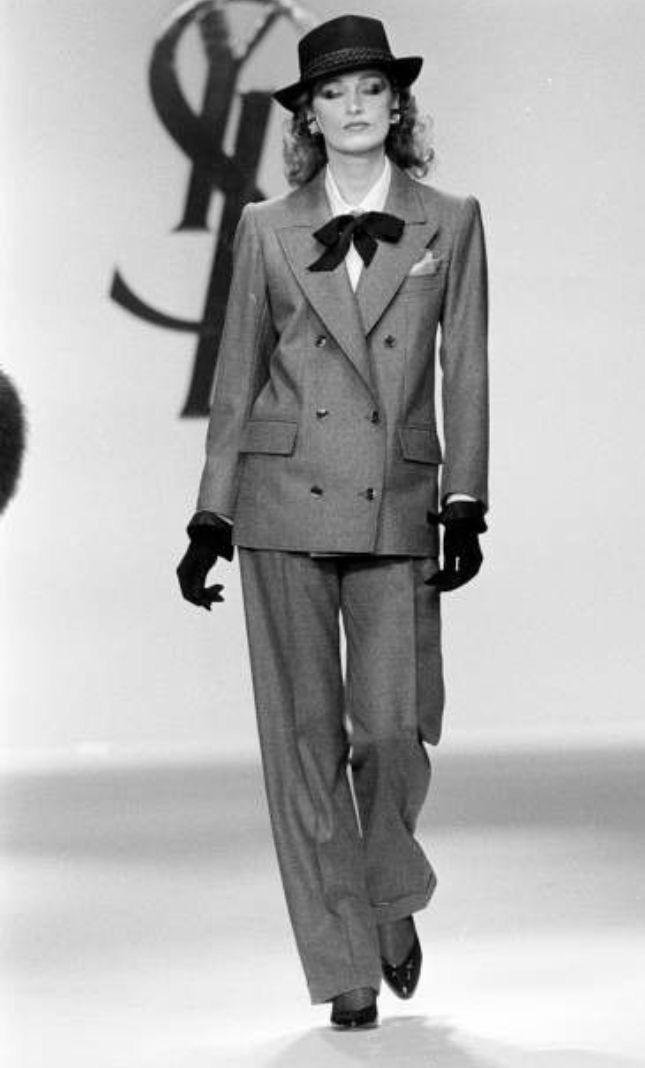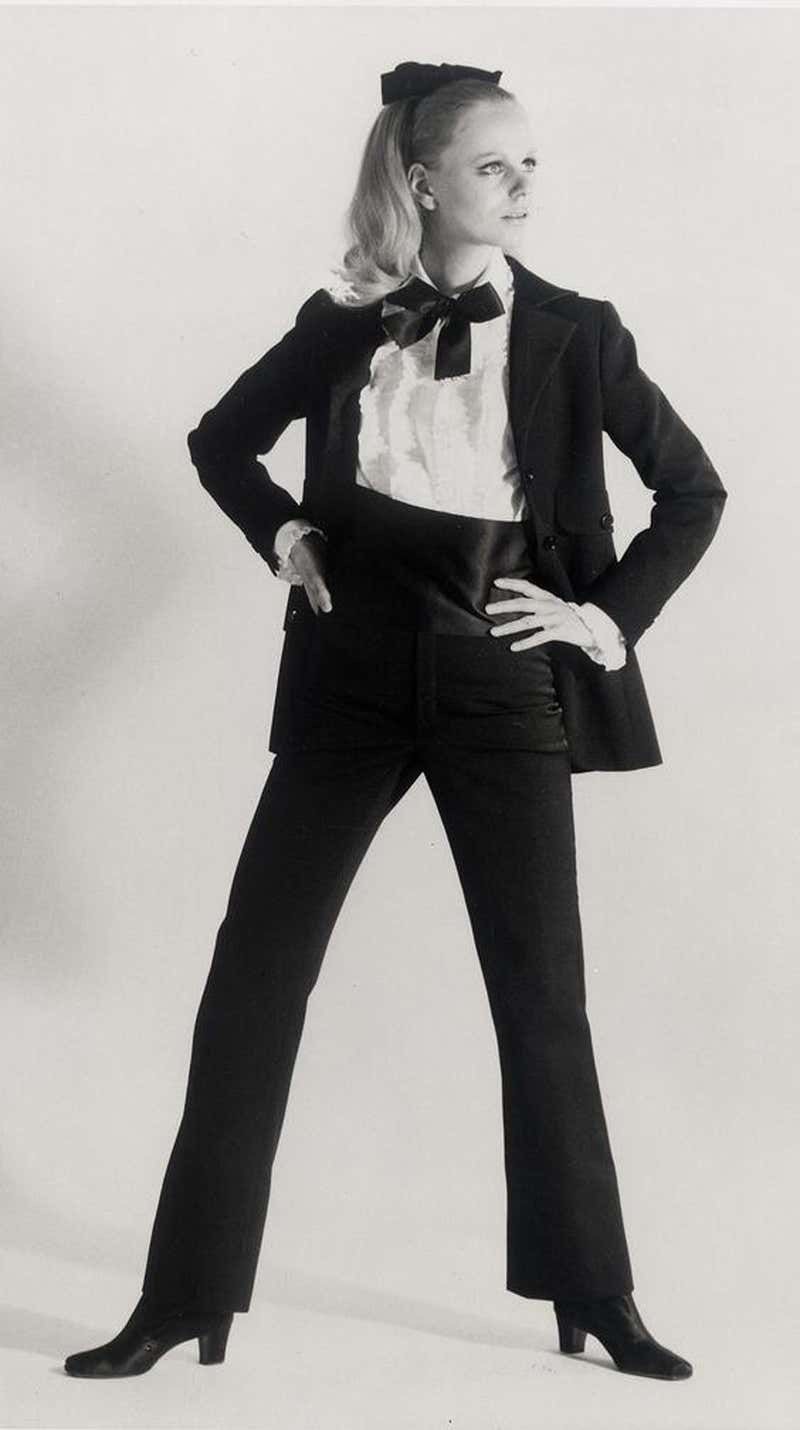
Yves Saint Laurent introduced Le Smoking in 1966, translating the codes of a man's evening tuxedo into women's haute couture. The move was not simply about borrowing a jacket. It offered a new posture: narrow trousers, controlled shoulders, satin lapels and the authority of black and white.Yves Saint Laurent presentó Le Smoking en 1966, trasladando los códigos del esmoquin masculino de noche a la alta costura femenina. No se trataba simplemente de tomar prestada una chaqueta. Ofrecía una postura nueva: pantalón estrecho, hombro controlado, solapas de satén y la autoridad del blanco y negro.
At the time, a woman in trousers could still be refused entry to formal spaces. Le Smoking therefore operated between elegance and confrontation. It used the visual language of institutional power while changing the body permitted to occupy it.En ese momento, una mujer con pantalones todavía podía ser rechazada en espacios formales. Le Smoking operaba entonces entre elegancia y confrontación. Usaba el lenguaje visual del poder institucional mientras cambiaba el cuerpo autorizado a ocuparlo.
“The garment changed the body allowed to signify power.”“La prenda cambió qué cuerpo podía significar poder.”
Photography made the suit culturally permanent. In Helmut Newton's nocturnal images, tailoring became narrative: androgyny, confidence, spectatorship and desire compressed into one sharp silhouette. The image did not document the garment; it expanded its social meaning.La fotografía volvió culturalmente permanente al traje. En las imágenes nocturnas de Helmut Newton, la sastrería se convirtió en relato: androginia, confianza, mirada y deseo comprimidos en una silueta nítida. La imagen no documentó la prenda; expandió su significado social.
Every later women's tuxedo enters a conversation that Le Smoking helped define. Its legacy is not that women began dressing like men, but that masculine tailoring stopped belonging to one gender. Power became a styling language available for reinterpretation.Todo esmoquin femenino posterior entra en una conversación que Le Smoking ayudó a definir. Su legado no es que las mujeres empezaran a vestirse como hombres, sino que la sastrería masculina dejó de pertenecer a un solo género. El poder se volvió un lenguaje de estilo disponible para reinterpretar.